Showing posts with label food sciences. Show all posts

Butter


Food Science | Butter | Butter is one of the most highly concentrated forms of fluid milk.Twenty litres of whole milk are needed to produce one kilogram of butter.This process leaves approximately 18 litres of skim milk and buttermilk, which at one time were disposed of as animal feed or waste.Today the skim portion has greatly increased in value and is fully utilized in other products.


Food

food
Food | Food Sciences | Food is any substance, composed of carbohydrates, fats, proteins, minerals and water, that can be eaten or drunk by animals, including humans, for nutrition or pleasure. Items considered food may be sourced from plants, animals or other categories such as fungus.


Milk

milk-food-product
Milk | Food Sciences | Milk is a white liquid produced by the mammary glands of mammals. It is the main source of nutrition for young mammals before they are able to digest other types of food. In early lactation milk contains colostrum, which carries the antibodies from mother to child and can reduce the risk of many diseases of children. The exact composition of raw milk varies by species and a number of other factors, but it contains significant amounts of saturated fat, protein and calcium and vitamin C. Cow's milk has a pH ranging from 6.4 to 6.8, making it slightly acidic.


Margarine

margarine
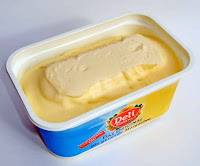
Margarine | agriculture commodities - food sciences | Margarine was first invented in France by a chemical expert named Hippolyte Mege-Mouries in 1869. The discovery of margarine is actually triggered by the situation in France at the time where the price of butter is very expensive so many people who can not afford it. This happens as a result of the influence of industrial revolution where a lot of farmers who left the farm and go for the city and work in industries. Consequently, there is a shortage of production so the price of butter became expensive because of high demand. To overcome this situation then in 1869 Napoleon III as ruler of France at that time held a contest and will give prizes to anyone who can find a cheap butter substitute, a replacement would have properties such as butter. Hippolyte Mege-Mouries won the competition because he was able to find what is desired by Napoleon III is a cheap substitute for butter. Mege-Mouries named his invention with margarine, the name is derived from Greek words "margarites" that have meaning "pearl". Named the pearl because the fat of margarine when forming dense granules shaped like a shiny crystal of pearls.


Science News: Grape skins prevent metabolic disorders

grape_skin_food_sciences
Science News: Grape skins prevent metabolic disorders | agriculture commodities - commodity prices - food sciences | Guarulhos, Brazil. A new Brazilian study found the grape skin extract protected the offspring of normally fed high fat-fed dams during lactation from the phenotypic and metabolic characteristics of metabolic syndrome (J Cardiovasc doctors. June 8, 2011).


Study: Survey on dairy cattle milk production and milk quality problems in peri-urban areas in Burkina Faso

Milk_production
Study: Survey on dairy cattle milk production and milk quality problems in peri-urban areas in Burkina Faso – A survey study was carried out around two large cities in Burkina Faso to contribute to the understanding of the situation of local milk production and milk processing. Twenty-two dairy farms associated with nine dairy processing units were selected for the study.

Two separate questionnaires were used to investigate the prerequisites for animal production and milk processing and the interviews were carried out from August to October 2006. Meanwhile, 110 milk samples from individual cows, 22 farm tank milk samples and nine dairy tank milk samples were analyzed. Results of the survey show that daily milk yield was 1 2 L per cow in sedentary traditional farms and 2 4 L per cow in semi intensive farms. Milk temperature at dairy farm level (32.5 ± 4.6°C) was an important factor reducing milk quality before reaching the collection centre.


Fish Protein Hydrolysates Beat Alternatives for Foods

Fish Protein Hydrolysates Beat Alternatives for Foods | agriculture commodities - commodity prices - food sciences | Protein hydrolysates from Pacific whiting, an abundant and under-utilised fish, produced better foams than bovine serum albumin, says new research from Mexico. 

Using the commercial protease Alcalase, researchers from the Centro de Investigacion en Alimentacion y Desarrollo produced hydrolysates from fish muscle that could substitute functional compounds such as bovine serum albumin and sodium caseinate. 


MILK: a Food Source for Humans (1)

milk_human_food
MILK: a  Food Source for Humans (1) - Composition and Structure: Overview.  The role of milk in nature is to nourish and provide immunological protection for the mammalian young. Milk has been a food source for humans since prehistoric times; from human, goat, buffalo, sheep, yak, to the focus of this section - domesticated cow milk (genus Bos). Milk and honey are the only articles of diet whose sole function in nature is food. It is not surprising, therefore, that the nutritional value of milk is high. Milk is also a very complex food with over 100,000 different molecular species found. There are many factors that can affect milk composition such as breed variations (see introduction, cow to cow variations, herd to herd variations - including management and feed considerations, seasonal variations, and geographic variations. With all this in mind, only an approximate composition of milk can be given:


Home - About - Privacy Policy - Disclaimer - Contact Us || Designed by Exotic Freshwater Fish